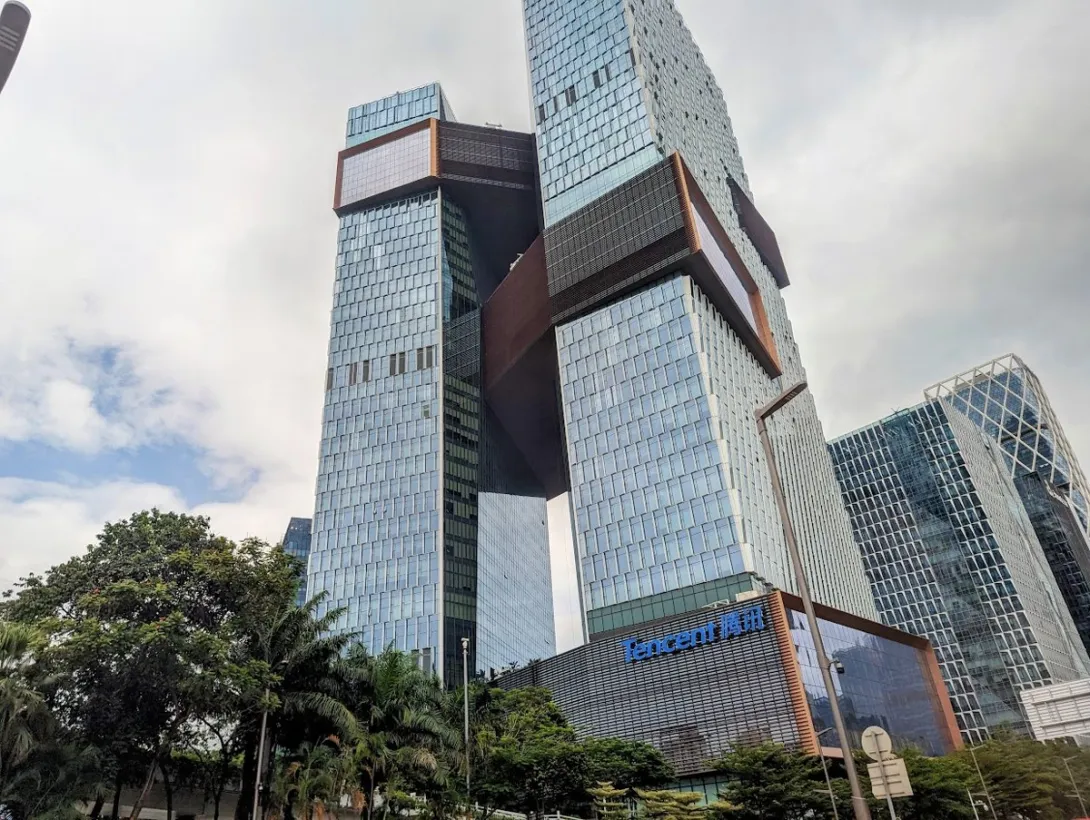
Tencent released the full version of Hy4 on Wednesday, November 4, completing a model it previewed in August and adding the two capabilities that matter most for real work: vision and computer use. The Shenzhen company says Hy4 can now interpret fine-grained image details and complex charts, and can operate across command-line tools and graphical interfaces on its own. It is live the same day through Tencent Cloud and OpenRouter, and inside Tencent products including CodeBuddy, WorkBuddy, Yuanbao and ima.
The underlying system is large. The August preview was a mixture-of-experts model with 770 billion total parameters and 49 billion active per token, and OpenRouter lists the full release with a 1,048,576-token context window and a 65,536-token completion limit. Pricing is unchanged from the preview, at 0.834 dollars per million input tokens, 2.501 dollars per million output tokens and 0.042 dollars per million cached input tokens. Tencent reports gains over the preview in instruction following, long-context understanding and long-horizon tasks, and says internal search hallucinations fell sharply. It also concedes, unusually plainly, that a large gap remains to the top closed models.
The safety design is the other half of the story. Reuters reported that Tencent restricted Hy4's cybersecurity training to defensive uses, such as identifying software flaws and helping to fix them, and excluded material on building hacking tools, breaking into systems and testing systems for weaknesses. Internal security specialists tested the model and found no sign of higher risk in helping users break into software, Tencent said, and its testing found the model did not meaningfully make harmful biological experiments easier. Moonshot made a similar choice last month, trimming the cyber-offensive training of its newest Kimi model before its open release.
For builders, the catch is in the release terms, not the capability list. Unlike the August preview, which arrived with downloadable weights, Hy4 ships as a hosted service only. Tencent says it plans to release the weights later, along with a system card describing its safety testing, with support from the vLLM and SGLang communities, and a faster Hy4 Flash version is also planned. Until those files actually appear, nobody outside Tencent can run, fine-tune or inspect the model itself, so calling this an open release today would be premature. The practical offer for now is a capable, inexpensive hosted model with vision and computer use, evaluated largely on Tencent's own benchmarks.
The day's other distribution fight came from Google, which faced swift backlash after announcing that K-12 schools using its software will lose student access to Search unless they opt in to its AI tools. Senator Bernie Sanders called the move extortion, and Google responded that Gemini, its notebook tool and Search will be off by default and can be turned on individually. Together, the two stories show where AI competition now happens: not only in model quality, but in who controls the defaults, the weights and the door through which users reach the technology.