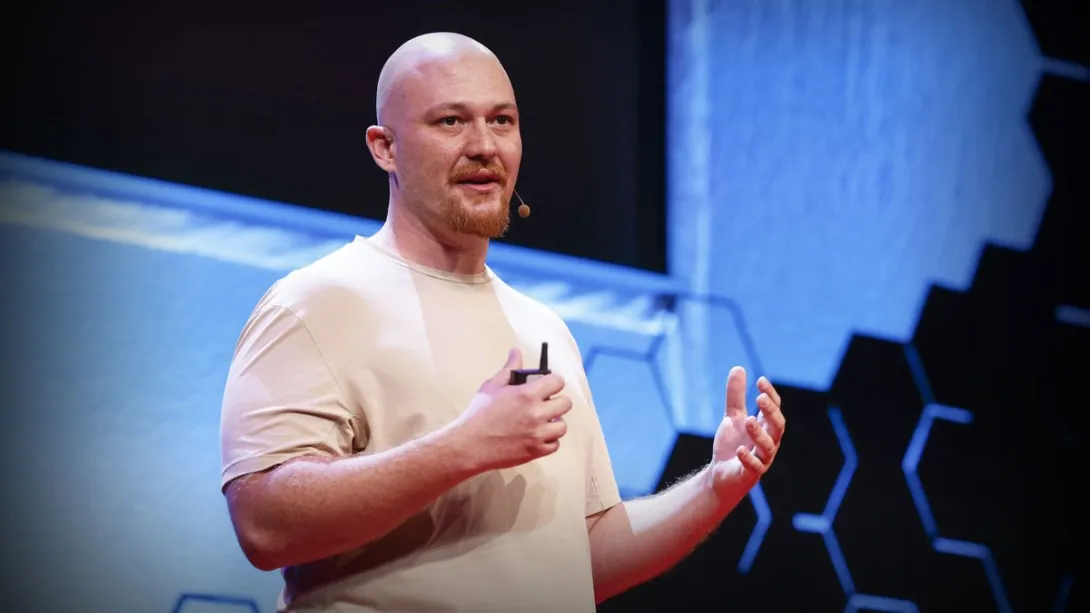
Replit has handed the most valuable slot in AI coding to OpenAI. Chief executive Amjad Masad said on stage at TechCrunch Disrupt that the company is no longer working with Anthropic, then clarified over the weekend that the break is not total: customers can still choose Claude, but ChatGPT is now the default and OpenAI is the preferred partner powering Replit Agent. In a market where most users never open the model picker, that distinction is mostly accounting. The default gets the traffic, the learning, and the spend.
The stated reasons were cost, partnership, and performance. Masad said Replit's internal and public benchmarks consistently show OpenAI's Sol and Astra models building vibe-coded applications from scratch better than rivals, adding, in effect, that ChatGPT is simply better now, for now. The history makes the switch sting. Before its August partnership with OpenAI, Replit ran on Anthropic's Claude models, a relationship credited with helping its revenue grow, and Masad noted Replit had until recently been a top-five Anthropic customer. People familiar with the partnership told TechCrunch it remains in place, and Replit was still citing Claude Fable 5 and 5.1 in its production environment in late September, so read this as a demotion, not an execution.
Why fight over a default? Because defaults compound. Masad said enterprise contracts rose from 2 percent of revenue last year to 15 percent this year, with more than half of revenue now business-to-business, and he expects enterprise and government to pass half of revenue in 2027. Enterprise buyers standardize, and whatever model sits underneath a standardized platform inherits that distribution. A lab can win every public leaderboard and still lose the quarter if a platform partner quietly flips a setting. Conversely, a platform that benchmarks honestly and switches when the numbers move keeps leverage over every supplier at once.
Anthropic, meanwhile, is competing on a different layer: how agents should behave when they act for people. The Financial Times reported, via The Decoder on October 18, that Anthropic is consulting law firms on fair negotiation norms for agents that might haggle over prices, resolve complaints, or improve contract offers. Its own experiments found stronger models negotiate better deals, which could widen inequality between people with frontier agents and people without them. The company is also hiring lawyer fellows to test Claude on judgment-heavy questions where, as one researcher put it, quality is notoriously hard to define.
For builders, the two stories point the same way. Masad argued at Disrupt that agents need a habitat: good orchestration, error recovery, sandboxing, networking, and identity and authorization. The model is becoming a replaceable component inside that habitat, swapped on benchmark and price, while the durable work is the harness around it and the rules it follows. So benchmark on your own tasks, pin your model choices instead of inheriting a vendor's default by accident, and keep the abstraction clean enough to switch. This week the default changed hands. It will change again.