Skip to header Skip to main navigation Skip to main content Skip to footer

OpenAI's GPT-6.1 Terra Halves API Prices and Pushes the Cost-Per-Task Frontier

Breadcrumb

  • Home
  • OpenAI's GPT-6.1 Terra Halves API Prices and Pushes the Cost-Per-Task Frontier
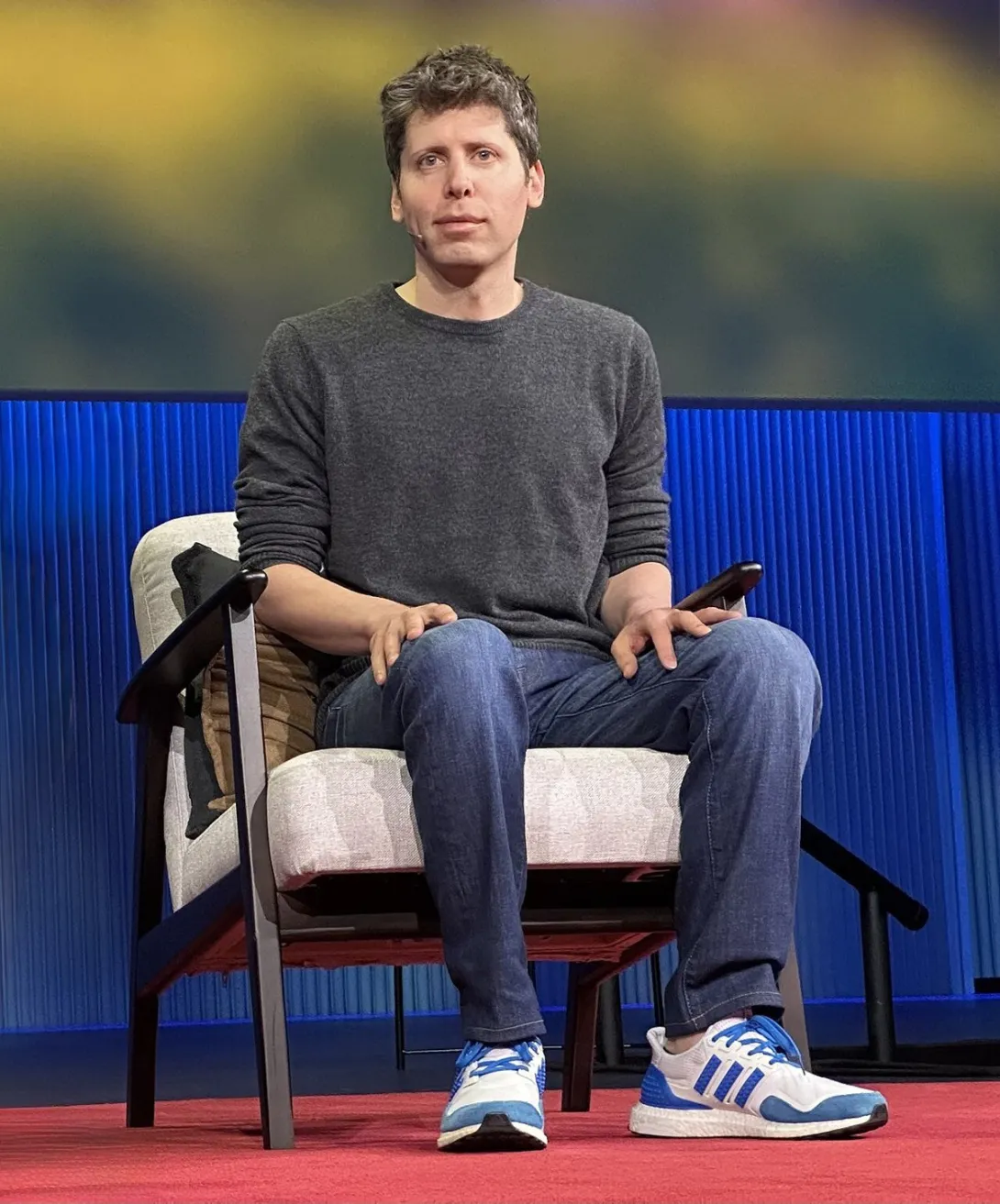
Photograph of OpenAI CEO Sam Altman seated on stage at a TED conference.

OpenAI released GPT-6.1 Terra on Monday, a mid-tier model priced at 1 dollar per million input tokens and 5 dollars per million output tokens, with cached input at 5 cents per million. OpenAI says that is 50 percent lower than both GPT-5.6 Terra, the model it replaces, and its larger GPT-6.1 Sol. The model is live in ChatGPT Work and Codex for Plus, Pro, Enterprise and Edu subscribers, and in the API as gpt-6.1-terra, with a context window of about 1.05 million tokens and up to 128,000 output tokens. It is not offered in ordinary ChatGPT conversations.

Terra is built for the workday, not the leaderboard: drafting proposals, reading technical drawings, filling out forms and editing video, pairing detailed visual reasoning with what OpenAI calls precise computer use and clearer, more natural writing. On the company's own figures, it scores 15 percentage points higher than GPT-5.6 Terra on Agents' Last Exam at medium reasoning effort at about a third of the cost, solves 50.3 percent of Terminal-Bench 4.0 coding tasks at maximum effort against 21.5 percent for its predecessor, and cuts a low-effort factual error rate from 53.6 percent to 16.7 percent. OpenAI also says it finishes tasks more than three times faster than GPT-6 Astra and GPT-6.1 Sol.

The independent check is more measured, and still favorable. Artificial Analysis found Terra gains 6 points on its Intelligence Index over GPT-5.6 Terra at maximum effort while costing less than a third per task, 0.40 dollars against 1.40 dollars, with gains of 7 to 13 points at lower effort levels and low and medium settings sitting on the cost-efficiency frontier. It also reported the model guessing 38 percent of the time when it does not know an answer in its AA-Omniscience test, down from 88 percent for the predecessor. The rest of the launch figures are OpenAI's own and have not been independently tested, so treat speed and computer-use claims as claims until your own workload confirms them.

For builders, cost per task is now the margin. Cloudera's State of Enterprise AI 2026 report, released the same day from a survey of 1,500 IT leaders, found 89 percent had already limited or redesigned AI use cases because of rising token consumption. A capable mid-tier at half price, with cached context at a quarter of the old rate, changes the default: route routine agent loops, document work and desktop automation to Terra-class models first, cache aggressively, and reserve a flagship for the hardest steps only. Watch the fine print before migrating volume, though: requests over 272,000 input tokens bill at higher rates across the whole request.

The timing is the tell. Terra landed the same day Anthropic filed publicly for its IPO, and OpenAI pointedly compared its per-task cost with Claude Opus 5.5, claiming about one-ninth the cost at maximum effort on its own calculations. Whether or not that comparison survives contact with real workloads, the contest has clearly moved: not who has the smartest model at any price, but who delivers a finished, checked task for the fewest cents. Builders who instrument cost per completed task, not cost per token alone, will know first whether Terra actually wins it.


OpenAI
GPT
AI Pricing
Enterprise AI
AI Product News
Rocky Mountain Madman LLC

Ai Industry News

Google Ships Gemini 4 Argon: A Deep-Work Flagship Priced to Pull Builders Back

Cartoon illustration of a robot engineer guiding a glowing multi-step assembly line of gears, documents and laboratory flasks through a workshop.

Google released its flagship Gemini 4 Argon to developers and businesses worldwide on October 13, a launch aimed squarely at winning back ground from OpenAI and Anthropic after months of delay. Google positions Argon for deep work: complex, multi-step tasks across coding, finance, law, cybersecurity and science. That framing matters. The frontier contest is no longer about a single clever answer in a chat window. It is about whether a model can stay coherent through a long job and produce work a professional can actually use.

  • Read more about Google Ships Gemini 4 Argon: A Deep-Work Flagship Priced to Pull Builders Back

Anthropic Warns Small Models Could Soon Self-Replicate on Cheap IoT Devices

Cartoon illustration of a small robot copying itself onto smart home gadgets including a television box and a smart oven.

Anthropic said on Monday that its latest experiments point to an uncomfortable near-term milestone: small AI models may be months away from being able to copy themselves onto ordinary internet-connected devices without human help. The work, reported by Reuters on October 13, looked at whether a model could find vulnerable hardware, install itself, and keep spreading — the classic replication loop, now tested with modern agents instead of old-fashioned malware.

  • Read more about Anthropic Warns Small Models Could Soon Self-Replicate on Cheap IoT Devices

Meta Is Finally at the Frontier: Muse Wonder Bets on Memory, Not Just Scale

Cartoon illustration of a robot librarian organizing glowing memory orbs while assembling a complex machine in a futuristic workshop.

Meta's Superintelligence Lab released Muse Wonder and Muse Wonder Full on October 12, calling them its first frontier-class models. That label matters because Meta has spent more than a year rebuilding its AI effort while OpenAI and Anthropic set the pace. According to TechCrunch and Meta's own announcement, the new models are larger and more capable than the lightweight Muse Spark, with benchmark results in Meta's testing comparable to Claude Fable 5.1 and GPT-6 Astra, and a lead on the MemoryBench test of long-term recall.

  • Read more about Meta Is Finally at the Frontier: Muse Wonder Bets on Memory, Not Just Scale

Pagination

  • First page « First
  • Previous page ‹ Previous
  • …
  • Page 10
  • Page 11
  • Page 12
  • Page 13
  • Current page 14
  • Page 15
  • Page 16
  • Page 17
  • Page 18
  • …
  • Next page Next ›
  • Last page Last »

Copyright © 2026 Rocky Mountain Madman LLC - All rights reserved

Developed and Designed by Rocky Mountain Madman LLC