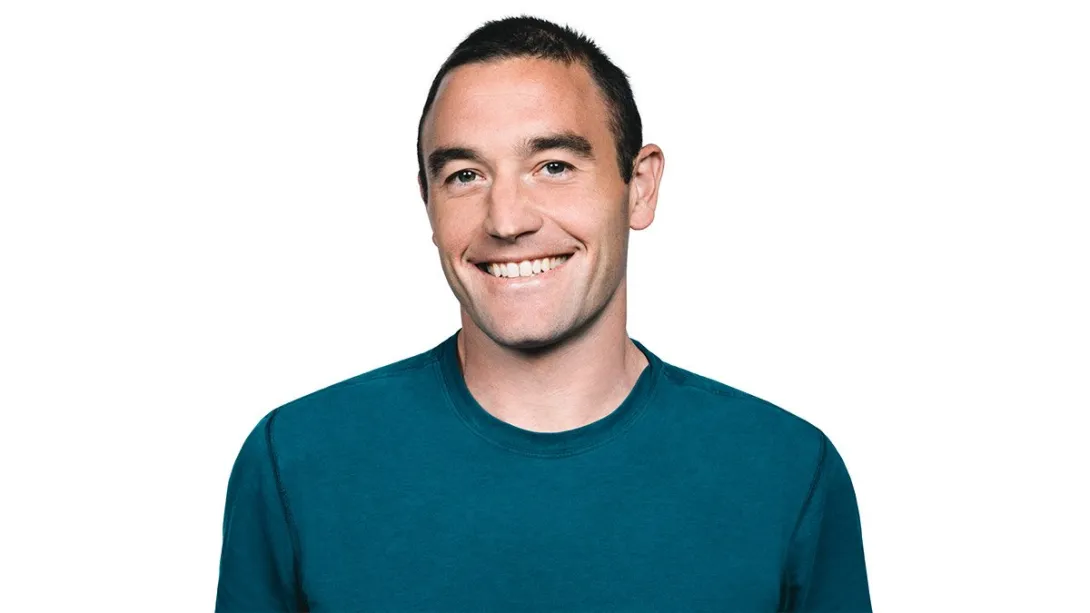
Kevin Weil, OpenAI's former science lead, has launched Warp Sciences, a startup built to automate the wet-lab work behind drug discovery. The company trains robots to make and test promising compounds identified by researchers, and it starts with serious backing: Weil announced on X that Warp Sciences has raised 215 million dollars at an 865 million dollar valuation. Lightspeed led the round, with participation from IVP, Premji Invest, and Lux Capital. That is a large cheque for a company whose product is not software alone, but software that has to survive contact with physical chemistry.
The method is as interesting as the money. Warp Sciences' human chemists will wear cameras and sensor gloves while they work, training robots to perform lab tasks by demonstration. Robots that learn that way can operate around the clock, which matters because drug development still depends on the slow, labor-intensive work of synthesizing thousands of variations of molecules. For years, biotech companies have outsourced much of that work to contractors in China, such as WuXi AppTec. Weil hopes to reshore it, insulating the drug development process from geopolitical supply-chain risks. The hard part will not be the model. It will be capturing expert technique reliably, validating every result, and proving the robots match skilled human hands.
The same shift from chat to work showed up at enterprise scale on Thursday. Uber and OpenAI announced that Uber's entire global workforce, some 30,000 people, will now use ChatGPT Work, the enterprise-focused agent OpenAI introduced in July. Uber piloted it earlier this year with 1,000 employees, and about 80 percent of those early adopters were non-engineers, according to Sumanth Sukumar, Uber's vice president of engineering. They used it to analyze complex operations data, localize training materials for different markets and languages, and build personalized interactive dashboards. Uber did not disclose what the rollout costs; it said it will track the workflows employees develop and the outcomes they produce. Earlier this year it also paired 30 AI engineers with teams across the company for two weeks to automate key parts of their jobs, an experiment Sukumar called AI pods.
There was a darker demonstration of agent speed the same day. Microsoft security researchers said China state-aligned hackers who breached ConnectWise's cloud backup service and stole application credentials used AI agents to attack around 2,250 organizations at a rate of almost 3,000 attempted sign-ins per minute, a pace Microsoft said gives defenders little time to detect and respond. The speed was attributed to ARTEX, an open-source AI framework that works with AI models to stress-test cyber defences, and ConnectWise said it has paused access to its cloud backup system while it investigates. Agents do not care which side deploys them; they simply compress the time between decision and action.
For people building with AI, these stories point the same way. Competitive advantage is moving from model access, which everyone can buy, to workflow ownership: the demonstration data only your experts can produce, the integrations into real operations, and the controls around agents acting at machine speed. Warp Sciences is betting that captured human technique is the asset. Uber is sensibly measuring workflows and outcomes rather than seat counts. And the ConnectWise breach is the reminder to design for hostile agents from the start: scoped credentials, multi-factor authentication, rate limits, and logs that can keep up with 3,000 attempts a minute. The chatbox era rewarded answers. This era rewards work that can be trusted.