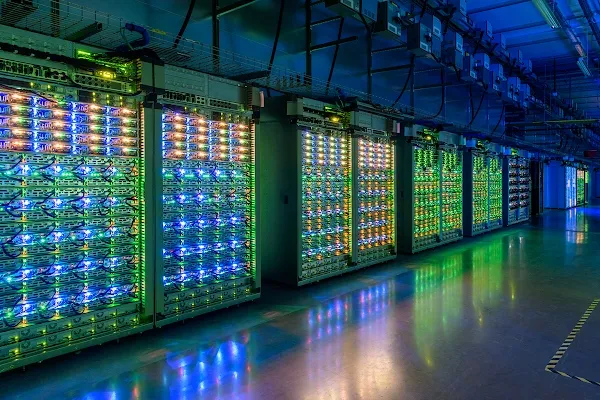
OpenAI announced on Wednesday, October 21, that its frontier models and its Codex agentic workflows are coming to Google Cloud's Model Garden, with general availability planned in the coming weeks and customers able to request access now. Google Cloud customers will be able to buy the models through Google Cloud Marketplace and draw the purchases down against existing Google Cloud spend commitments, and OpenAI said the models will soon also be available inside Google Antigravity and the Gemini Agent. Reuters reported that the offering includes OpenAI's latest models such as GPT-6 Astra. One line in the announcement matters as much as the news itself: Microsoft remains OpenAI's primary cloud partner.
That qualifier tells the story of the year. OpenAI's exclusive distribution arrangement with Microsoft expired in April, Amazon Web Services began hosting OpenAI models shortly after, and Google Cloud now completes the set: OpenAI is for sale on all three major United States cloud platforms. The rivalry has not ended. OpenAI and Google still compete head-on in models and search, and Google is now putting a competitor's models inside its own agent and development tools. What has changed is the economics. Training and serving frontier models is so expensive that no lab can afford to leave a hyperscaler's enterprise sales force, procurement contracts, and committed-spend budgets unharvested.
For builders, the practical effect is that model choice is becoming a procurement decision instead of a migration project. A team already on Google Cloud no longer has to move data, renegotiate governance, or open a separate vendor relationship just to evaluate OpenAI against Gemini. OpenAI said regulated-industry customers will be able to run its models under Google Cloud's access controls, data governance tools, and infrastructure for agentic workflows, which is often the real blocker in finance, health, and government work. The caution is equally practical: this is an announced rollout, not a switch that is on in every account today. OpenAI has not published a complete model list, price sheet, or regional availability in its announcement, so no one should promise a client a Model Garden deployment date until general availability actually lands.
The same day's other instructive story came from the physical end of the field. Eka Robotics said on October 20 that it has closed a 150 million dollar Series A at a 1.45 billion dollar post-money valuation, co-led by a16z and F-Prime, according to TechCrunch and SiliconANGLE. Eka, founded by MIT professor Pulkit Agrawal and former Google DeepMind researcher Tuomas Haarnoja, pairs a force-sensitive gripper costing less than 1,000 dollars with what it calls a vision-force-action model, trained in simulation rather than on human demonstrations. The company says its robots pick about 1,500 objects of up to one kilogram per hour at better than 95 percent success, and that unnamed industrial customers are piloting pick-and-place and wire-handling work. Outside roboticists quoted by TechCrunch were genuinely impressed, while also noting the unglamorous test that still decides everything in robotics: running on a real assembly line for a year without breaking down.
Put the two stories together and the pattern for anyone building with AI is clear. At the top of the stack, frontier models are turning into shelf goods, distributed everywhere and increasingly interchangeable at purchase time, so advantage moves to your workflows, your data, and your governance. At the bottom of the stack, the scarce thing is still a machine, or a system, that performs reliably in the messy world outside a demo. Budget accordingly: buy models wherever they are cheapest to govern well, and spend your engineering effort where distribution cannot commoditize you.