Skip to header Skip to main navigation Skip to main content Skip to footer

Marvell Is Buying the Light: A 115 Billion Dollar Bet That AI Is a Connectivity Problem

Breadcrumb

  • Home
  • Marvell Is Buying the Light: A 115 Billion Dollar Bet That AI Is a Connectivity Problem
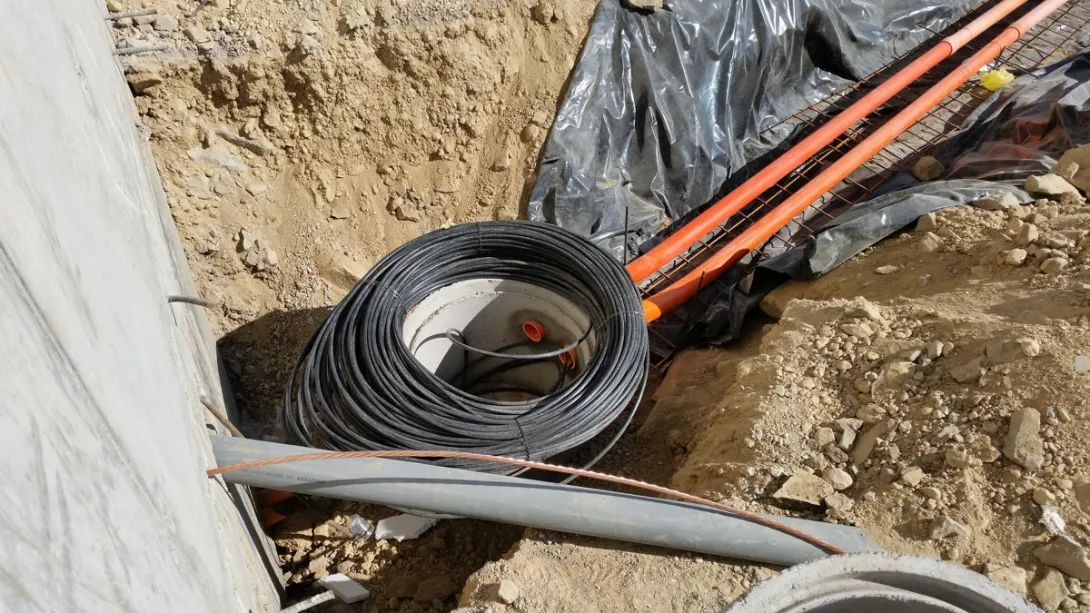
A coil of fiber optic cable being installed in a trench alongside orange conduit at a construction site.

Custom chip designer Marvell has signed a deal to acquire optical chip and networking equipment maker Lumentum in an all-stock transaction with an enterprise value of 115 billion dollars, including debt, and an equity value of about 80 billion dollars. Lumentum shareholders will receive 4.5 shares of Marvell common stock for each share they hold. TechCrunch, which reported the agreement on November 2, notes that the scale puts it among the largest acquisitions in technology history, ahead of Microsoft's 68.7 billion dollar purchase of Activision Blizzard and Dell's 67 billion dollar purchase of EMC.

The logic is about what actually limits a large AI cluster. Training and inference at frontier scale are no longer constrained only by how many accelerators a company can buy. They are also constrained by how fast data can move between those accelerators, between racks, and between buildings, and by how much power that movement consumes. Lumentum makes the lasers and optical components that carry data as light, while Marvell designs custom silicon and networking products. Marvell says the combination will make it a leader in AI connectivity, with products ranging from chips to data centers. That is a claim about owning more of the plumbing, not about releasing a better model.

One detail shows how central this layer has become. Nvidia is a major shareholder in both companies. In March, as part of a multi-year agreement to purchase Lumentum's advanced laser components, Nvidia invested 2 billion dollars to support Lumentum's research and development and fab expansion. Later that same month, Marvell announced that Nvidia had also invested 2 billion dollars in its optical networking and chips portfolio. When the dominant accelerator maker puts money into both sides of a deal, builders should read it as a signal that interconnect supply is strategic, not a commodity to be sourced at the last minute.

The deal is proposed, not completed. Marvell expects it to close in the first half of calendar year 2028, and only if shareholders of both companies and regulators agree. That long timeline matters. Anyone designing infrastructure today cannot plan around a combined Marvell and Lumentum product line that does not yet exist, and should keep second sources, contractual flexibility, and realistic delivery dates in view. Consolidation can improve integration, but it can also narrow choice in a market where lead times already shape what can be deployed.

A smaller release the same day pointed at the other end of the stack. Anthropic put message threads into public beta on its Messages API on November 2, allowing an application to send a full conversation once and then send only new messages with the previous response ID. Anthropic reports that median time to first token fell by about 35 percent on requests carrying 500,000 to 1 million tokens in its Claude Code rollout. The threads expire five minutes after the last request, token usage and pricing do not change, and developers must still keep their own copy of the conversation. Together, the two stories make the same practical point: the next gains for people building with AI will often come from moving less data, more efficiently, whether that data travels as light between chips or as a smaller request between an agent and an API.


Rocky Mountain Madman LLC
AI Implementation
Enterprise AI
AI Funding
Large Language Models

Ai Industry News

Nvidia Puts $250 Million of Compute Behind UK Research on Keeping AI Agents Safe

Cartoon illustration of robot safety engineers testing a small autonomous robot inside a clear protective dome in a university laboratory.

Nvidia announced on October 14 a five-year donation of computing resources valued at 250 million dollars to support research in the United Kingdom on the safety and security of agentic AI. The commitment works out to 50 million dollars in compute access per year, delivered through UK-based Nvidia Cloud Partners. Most of it is aimed at the wider UK safety research community, with a share set aside for three named efforts: the BOLD lab led by the University of Oxford, the SOFAIR lab led by University College London, and Imperial College London.

  • Read more about Nvidia Puts $250 Million of Compute Behind UK Research on Keeping AI Agents Safe

A Bug in the Boardroom: OpenAI Insider Case Puts Lab Security on Trial

Cartoon illustration of a robot security guard shining a flashlight on a tiny hidden microphone behind a television in a boardroom.

Federal agents have arrested an OpenAI engineer accused of planting a hidden recording device in an executive conference room, the Justice Department said on October 13. Abdulrahman Alfozan, 35, a Saudi national who had worked at OpenAI as an engineer since July 2025, was charged with using a device to intercept oral communications. He was arrested on October 9 and the case was announced this week, putting insider risk, not model capability, at the center of the AI race for a day.

  • Read more about A Bug in the Boardroom: OpenAI Insider Case Puts Lab Security on Trial

Google Ships Gemini 4 Argon: A Deep-Work Flagship Priced to Pull Builders Back

Cartoon illustration of a robot engineer guiding a glowing multi-step assembly line of gears, documents and laboratory flasks through a workshop.

Google released its flagship Gemini 4 Argon to developers and businesses worldwide on October 13, a launch aimed squarely at winning back ground from OpenAI and Anthropic after months of delay. Google positions Argon for deep work: complex, multi-step tasks across coding, finance, law, cybersecurity and science. That framing matters. The frontier contest is no longer about a single clever answer in a chat window. It is about whether a model can stay coherent through a long job and produce work a professional can actually use.

  • Read more about Google Ships Gemini 4 Argon: A Deep-Work Flagship Priced to Pull Builders Back

Pagination

  • First page « First
  • Previous page ‹ Previous
  • …
  • Page 17
  • Page 18
  • Page 19
  • Page 20
  • Current page 21
  • Page 22
  • Page 23
  • Page 24
  • Page 25
  • …
  • Next page Next ›
  • Last page Last »

Copyright © 2026 Rocky Mountain Madman LLC - All rights reserved

Developed and Designed by Rocky Mountain Madman LLC