Skip to header Skip to main navigation Skip to main content Skip to footer

Anthropic's FlashProve Could Prove Which Model Answered You

Breadcrumb

  • Home
  • Anthropic's FlashProve Could Prove Which Model Answered You
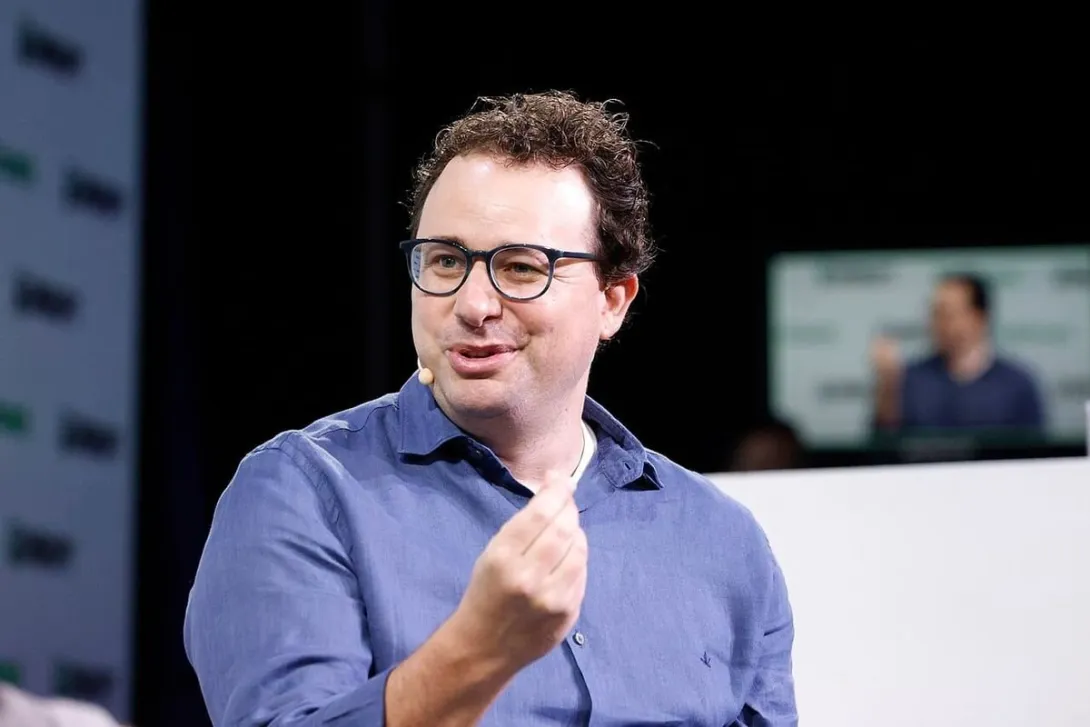
Anthropic CEO Dario Amodei speaking on stage at a TechCrunch event.

Anthropic published FlashProve on November 3, an open-source prototype for what its researchers call provable inference. The idea is simple to state and hard to do: when a model answers you, it should also produce a cryptographic proof that the answer really came from the specific model you were told you were using. TechCrunch reported the release the same day, and Anthropic released a technical report, a protocol specification, executable code and formal proofs under the Apache 2.0 license.

FlashProve works in two steps. A provider first publishes a commitment, a short fingerprint of one exact set of model weights, while the weights themselves stay private. Each response then carries a proof, built with a type of cryptographic proof known as a zkSNARK, that those committed weights produced those exact words. Anthropic tested the system on Meta's Llama 4 Maverick, a 400-billion-parameter mixture-of-experts model in 4-bit form. A single H100 GPU generated proofs at about 110 tokens per second, with a proof of about 19 megabytes for a 1,024-token request. Verification takes seconds, but proving takes about 70 to 95 times the GPU time of running the model itself.

That cost is why this matters as a direction rather than as a product. Anthropic says plainly that the research is intermediate progress, that there are no plans to deploy FlashProve at Anthropic or any other lab, and that others should take the work and improve it. The current prototype also covers only mixture-of-experts models, short contexts and a whole-number version of a model under greedy decoding. A user must still trust that a published commitment belongs to the model a lab says it does. None of that makes the underlying problem go away.

The problem is getting more commercial by the month. A routing service can quietly substitute a cheaper model, an attacker can tamper with a token stream, an evaluator can be shown a stronger model than customers receive, and a regulator can be told an approved model is running when it is not. Menlo Ventures, in its State of Enterprise AI report also released on November 3, estimated that enterprise AI deployment spending reached 176.8 billion dollars by September, up 5.4 times from 33 billion dollars a year earlier, and that agents now generate 80 percent of tokens on OpenRouter. When machines, not people, are most of the customers, a receipt for which model did the work stops being an academic curiosity.

For builders, the practical lesson is to start asking for receipts now, even before proofs this strong are affordable. Log the exact model identifier, provider and routing path for every consequential agent run, keep those logs where a client or auditor can inspect them, and treat any silent model substitution as a breach of contract rather than a routine upgrade. FlashProve will not run in production tomorrow at 70 to 95 times the cost of inference. But it shows that model identity can, in principle, be proved without revealing the weights, and that is the standard the largest buyers will eventually demand.


Anthropic
AI Safety
Enterprise AI
Large Language Models
Mixture of Experts
Rocky Mountain Madman LLC

Ai Industry News

Anthropic Says One Agent Beats Many: Fold Your Subagents Back Into the Loop

Photograph of Dario Amodei.

Anthropic is telling enterprise builders to do the unfashionable thing: use fewer agents. In guidance published October 22 from its Applied AI team, and reported widely on October 25, the company said that across several enterprise deployments a single agent that loads skills and tools only when needed frequently beat both a one-prompt-for-everything design and a fleet of specialised subagents on quality, and often cost less and ran faster. In one comparison the single-agent setup ran about twice as fast as the multi-agent version it replaced.

  • Read more about Anthropic Says One Agent Beats Many: Fold Your Subagents Back Into the Loop

1Password Lets Agents Log In Without Ever Seeing the Password: The Approval Is the Product

The fastest way to make an AI agent useful is also the fastest way to make it dangerous: give it your passwords. 1Password took direct aim at that bargain on October 22 with 1Password for Agents, a system that lets a supported agent sign in to your accounts without ever seeing, handling, or storing the password itself. Chief executive Aashish Tripathi put the problem plainly in the launch statement: agents are starting to do real work on our behalf, and the old model, where you hand over a credential and hope for the best, does not work.

  • Read more about 1Password Lets Agents Log In Without Ever Seeing the Password: The Approval Is the Product

Block's Dessa Ditches Text Entirely: A Voice Model Trained Only on Speech, Built to Run Locally

Photograph of Jack Dorsey.

Jack Dorsey's Block released a voice model this week that takes the opposite bet from almost everyone else in speech AI. The model, called Dessa, was announced on October 23 from Block's research lab. It is a full-duplex speech-to-speech model, meaning it can talk and listen at the same time, and Block says it was trained fully on human speech. There is no text pipeline in the middle. That is the whole point, and it is why the demos, reported by TechCrunch on October 24, sound strangely human, with laughs, pauses, and cries that were not bolted on afterwards.

  • Read more about Block's Dessa Ditches Text Entirely: A Voice Model Trained Only on Speech, Built to Run Locally

Pagination

  • First page « First
  • Previous page ‹ Previous
  • …
  • Page 7
  • Page 8
  • Page 9
  • Page 10
  • Current page 11
  • Page 12
  • Page 13
  • Page 14
  • Page 15
  • …
  • Next page Next ›
  • Last page Last »

Copyright © 2026 Rocky Mountain Madman LLC - All rights reserved

Developed and Designed by Rocky Mountain Madman LLC