Anthropic is telling enterprise builders to do the unfashionable thing: use fewer agents. In guidance published October 22 from its Applied AI team, and reported widely on October 25, the company said that across several enterprise deployments a single agent that loads skills and tools only when needed frequently beat both a one-prompt-for-everything design and a fleet of specialised subagents on quality, and often cost less and ran faster. In one comparison the single-agent setup ran about twice as fast as the multi-agent version it replaced.
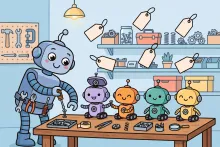
The failure mode Anthropic describes will sound familiar to anyone who has watched an agent platform grow inside a large company. Each team ships its own subagent, an orchestrator gets layered on top, and the architecture becomes a copy of the org chart. Anthropic calls the prompt that results a Frankenprompt: every team adds its rules until they contradict each other and no consistent voice survives. One customer-facing agent it worked with had a dozen specialised subagents, making a consistent brand experience hard to keep and adding latency at every handoff, where context was summarised and detail was lost. Its alternative is plain: a clean system prompt, four or five lean data tools, fixed output guardrails, and skills loaded on demand.
The timing is the point. Anthropic says models from Claude Opus 4.5 onward, including Opus 5.5, can manage far more complexity inside one loop than most teams expect: they write their own plan, revise it as tool results arrive, and increasingly comment on and check their own work. The company says it cut the Claude Code system prompt for newer models by over 80 percent, partly because skills and tools now load progressively instead of sitting in context from the start. It has published a migration kit and a free single-agent-loop-kit on GitHub that audits an existing system and gives each subagent a verdict: fold it in, merge it, call it as a tool, or keep it.
This is not a ban on subagents. Anthropic keeps them where they earn their place: when a single loop shows measurable performance drops from context bloat, when several tasks genuinely need to run in parallel in fresh context windows, or when one agent keeps choosing the wrong tool or is carrying conflicting instructions. It also warns against merging blindly. In one support-agent test, folding in a subagent cut latency but broke a working process, because the main agent answered on its own instead of consulting the specialist. The recommended path is empirical: build an end-to-end evaluation first, fold one subagent at a time into skills and tools, and keep only the splits the scores justify. Tool discipline matters too, since the company notes tool selection tends to degrade once more than 30 to 50 tool definitions are loaded.
TechCrunch made the complementary point on October 24 with its running AI graveyard, a list of products and startups that have shut down, pivoted, or missed expectations. It cites S&P Global Market Intelligence estimating that about 42 percent of corporate AI initiatives are ultimately abandoned, and records Relay, a five-year-old workflow automation startup, closing in August as larger platforms built similar automation into their own tools, alongside OpenAI folding Atlas, Operator, and Sora back into ChatGPT. Read together, they argue the same case: the winners in this phase are not the teams with the most agents or the most products. They are the teams with one well-owned system, measured end to end, and the discipline to delete the layers that no longer earn their cost.