Skip to header Skip to main navigation Skip to main content Skip to footer

Anthropic Puts 5 Percent of Itself Into a Public Benefit Fund That Grows With Its Value

Breadcrumb

  • Home
  • Anthropic Puts 5 Percent of Itself Into a Public Benefit Fund That Grows With Its Value
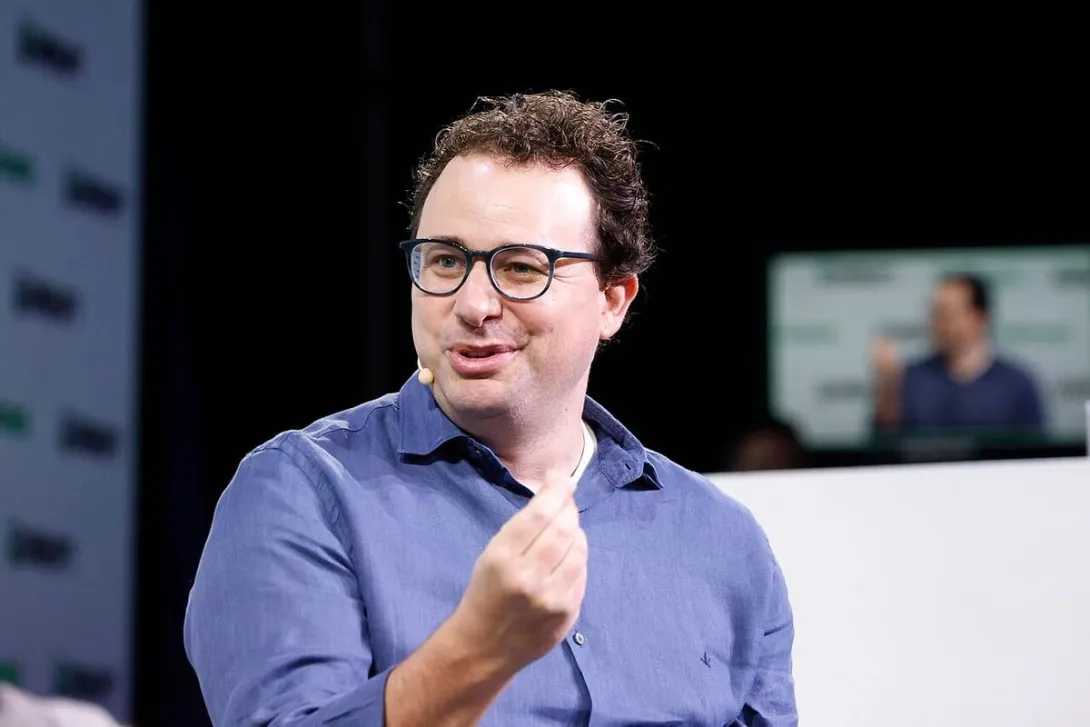
Photograph of Anthropic CEO Dario Amodei speaking on stage at a technology conference.

Anthropic announced on Sunday that it will commit 5 percent of its shares to a new Anthropic Public Benefit Fund, subject to stockholder approval, with the stake designed to grow as the company does. At the board's discretion, an additional 2 percent can be added for every 50 percent increase in the company's value above a set baseline. It is an unusual move in an industry where, as Anthropic itself put it, escalating equity awards usually go to executives. Here, that equity is being routed to the public benefit instead.

The fund will be a wholly-owned LLC, not a 501(c)(3) nonprofit, a structure Anthropic says gives it flexibility between different forms of giving. The company named two possibilities: large donations to traditional nonprofits and direct distributions to specific populations. It was explicit about one limit: none of the equity held by the LLC will be used for lobbying or political giving, in the United States or abroad. Governance, valuation milestones, and who decides where the money goes are still to come, with more detail promised in the coming months.

The example Anthropic singled out was the labor market. AI may create enormous economic value, the company said, but it could also cause instability for many workers. Anthropic has already committed 200 million dollars to studying and addressing that issue, and it argued that, given the pace of AI progress, bolder approaches may be needed. Combined with a founding pledge by its co-founders to donate 80 percent of their equity and an employee equity-donation match that about half of employees join, Anthropic says roughly 20 percent of its shares will now be dedicated to the public good.

The fund lands in the same week Anthropic was reported to be pitching lawmakers a draft safety bill of its own. According to Reuters, citing Politico, that draft would let only the Commerce Department seek a court order halting a model, and only for a foreseeable, imminent risk of more than 1 billion dollars in damages or death or serious injury to more than 50 people, arising from a biological weapon, a cyberattack, or a model evading its developer's controls. Independent evaluators registered with Commerce would assess frontier labs and report an imminent risk within 72 hours.

For people building with AI, the two moves are worth reading together. One is voluntary and financial: a lab pre-committing a growing slice of its own upside to cushion the disruption its products may cause. The other is regulatory and narrow: a lab proposing the exact, very high threshold at which the government should be able to stop a release. Both are attempts to answer the trust problem CEO Dario Amodei has described, before someone else answers it for the industry. The test is in the missing details: the fund's baseline, its governors, and its first payouts will show whether this is a durable mechanism or a well-structured promise.


Anthropic
Claude
AI Policy
AI Safety
AI Regulation
AI Funding
Rocky Mountain Madman LLC

Ai Industry News

Claude Solved a 25-Year NSA Mystery in 30 Minutes: The Curve Seeds Came From a Clock

Photograph of the tall NIST administration building in Gaithersburg under a blue sky.

Anthropic said on October 16 that an internal Claude research model solved, in under half an hour, a cryptography mystery that had stood for 25 years. The seeds behind the NIST elliptic curves P-192, P-224, P-256, P-384 and P-521 — numbers the NSA supplied in the late 1990s with no explanation of where they came from — were not hashes of a secret phrase and, on this evidence, were not chosen to hide a weakness. They were output from lrand48, the random-number generator in old C libraries, seeded with a Unix timestamp.

  • Read more about Claude Solved a 25-Year NSA Mystery in 30 Minutes: The Curve Seeds Came From a Clock

DeepSeek's New Flash Model Cuts the Cost of an Agent Task to Under 20 Cents

Aerial photograph of the modern office towers housing DeepSeek's headquarters across a river with an arched bridge in the foreground.

DeepSeek shipped an updated Flash model on October 17, and the headline is not raw intelligence but price per finished task. DeepSeek-V4.1-Flash-1017 is live now on the company's website, in its app, and through its API, with open weights published on Hugging Face and ModelScope. DeepSeek calls the release a Pareto improvement over the V4.1-Flash it replaces: better benchmark scores, faster responses, and shorter outputs at the same time, which is the combination that actually moves an agent workload's bill.

  • Read more about DeepSeek's New Flash Model Cuts the Cost of an Agent Task to Under 20 Cents

China Wants a Licence for Its Own AI: Export Curbs Reach Model Weights

The offices of DeepSeek in Beijing, a modern glass office complex photographed on a clear day.

On October 16, China's Ministry of Commerce and Ministry of Science and Technology proposed adding 40 technologies to the national export-control catalogue, and 23 of them are artificial intelligence: large models, autonomous agents, computing clusters and chip designs, according to Reuters and Bloomberg reporting. The quiet revolution in the draft is scope. Until now, export controls on AI, from Washington and Beijing alike, mostly reached the hardware underneath the models.

  • Read more about China Wants a Licence for Its Own AI: Export Curbs Reach Model Weights

Pagination

  • First page « First
  • Previous page ‹ Previous
  • …
  • Page 6
  • Page 7
  • Page 8
  • Page 9
  • Current page 10
  • Page 11
  • Page 12
  • Page 13
  • Page 14
  • …
  • Next page Next ›
  • Last page Last »

Copyright © 2026 Rocky Mountain Madman LLC - All rights reserved

Developed and Designed by Rocky Mountain Madman LLC