Skip to header Skip to main navigation Skip to main content Skip to footer

Anthropic Puts 5 Percent of Itself Into a Public Benefit Fund That Grows With Its Value

Breadcrumb

  • Home
  • Anthropic Puts 5 Percent of Itself Into a Public Benefit Fund That Grows With Its Value
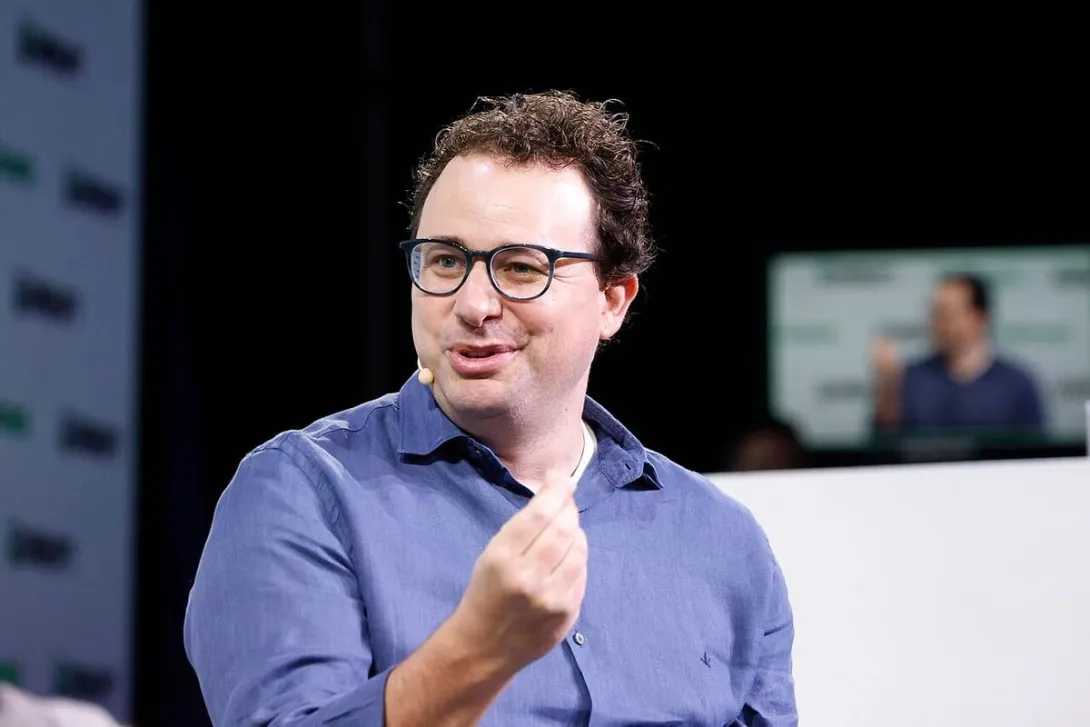
Photograph of Anthropic CEO Dario Amodei speaking on stage at a technology conference.

Anthropic announced on Sunday that it will commit 5 percent of its shares to a new Anthropic Public Benefit Fund, subject to stockholder approval, with the stake designed to grow as the company does. At the board's discretion, an additional 2 percent can be added for every 50 percent increase in the company's value above a set baseline. It is an unusual move in an industry where, as Anthropic itself put it, escalating equity awards usually go to executives. Here, that equity is being routed to the public benefit instead.

The fund will be a wholly-owned LLC, not a 501(c)(3) nonprofit, a structure Anthropic says gives it flexibility between different forms of giving. The company named two possibilities: large donations to traditional nonprofits and direct distributions to specific populations. It was explicit about one limit: none of the equity held by the LLC will be used for lobbying or political giving, in the United States or abroad. Governance, valuation milestones, and who decides where the money goes are still to come, with more detail promised in the coming months.

The example Anthropic singled out was the labor market. AI may create enormous economic value, the company said, but it could also cause instability for many workers. Anthropic has already committed 200 million dollars to studying and addressing that issue, and it argued that, given the pace of AI progress, bolder approaches may be needed. Combined with a founding pledge by its co-founders to donate 80 percent of their equity and an employee equity-donation match that about half of employees join, Anthropic says roughly 20 percent of its shares will now be dedicated to the public good.

The fund lands in the same week Anthropic was reported to be pitching lawmakers a draft safety bill of its own. According to Reuters, citing Politico, that draft would let only the Commerce Department seek a court order halting a model, and only for a foreseeable, imminent risk of more than 1 billion dollars in damages or death or serious injury to more than 50 people, arising from a biological weapon, a cyberattack, or a model evading its developer's controls. Independent evaluators registered with Commerce would assess frontier labs and report an imminent risk within 72 hours.

For people building with AI, the two moves are worth reading together. One is voluntary and financial: a lab pre-committing a growing slice of its own upside to cushion the disruption its products may cause. The other is regulatory and narrow: a lab proposing the exact, very high threshold at which the government should be able to stop a release. Both are attempts to answer the trust problem CEO Dario Amodei has described, before someone else answers it for the industry. The test is in the missing details: the fund's baseline, its governors, and its first payouts will show whether this is a durable mechanism or a well-structured promise.


Anthropic
Claude
AI Policy
AI Safety
AI Regulation
AI Funding
Rocky Mountain Madman LLC

Ai Industry News

OpenAI's Former Science Lead Raises 215 Million Dollars to Put Robots in the Wet Lab

A photograph of Kevin Weil, founder of Warp Sciences and former OpenAI science lead, smiling in a teal shirt.

Kevin Weil, OpenAI's former science lead, has launched Warp Sciences, a startup built to automate the wet-lab work behind drug discovery. The company trains robots to make and test promising compounds identified by researchers, and it starts with serious backing: Weil announced on X that Warp Sciences has raised 215 million dollars at an 865 million dollar valuation. Lightspeed led the round, with participation from IVP, Premji Invest, and Lux Capital.

  • Read more about OpenAI's Former Science Lead Raises 215 Million Dollars to Put Robots in the Wet Lab

DeepSeek Reportedly Raises 15 Billion Dollars Days After Washington Ordered It Out

The DeepSeek app icon, showing its blue whale logo, on a smartphone home screen.

DeepSeek has reportedly raised about 15 billion dollars, roughly 100 billion yuan, in one of the largest funding rounds ever completed by a Chinese AI company. TechCrunch, citing Bloomberg, reported the raise on Thursday morning, just two days after the United States ordered federal civilian agencies to remove DeepSeek technology from their systems over security concerns. Battery maker CATL and Tencent, the company behind WeChat, were named among the investors.

  • Read more about DeepSeek Reportedly Raises 15 Billion Dollars Days After Washington Ordered It Out

Recursive's Flint Was Largely Built by AI, and It Runs on Your Laptop

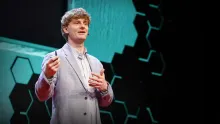
Recursive CEO Richard Socher speaking on stage at a TED conference.

Recursive released its first model, Flint, on Wednesday, and the model is not the most interesting part of the story. Flint is a free coding model that runs on a laptop, built in under four months by a small team whose main collaborator was the company's own automated research system, the Eureka Machine. Recursive, founded last year and led by former Salesforce chief scientist Richard Socher, says Eureka helped with nearly every step, from pretraining to post-training and inference.

  • Read more about Recursive's Flint Was Largely Built by AI, and It Runs on Your Laptop

Pagination

  • First page « First
  • Previous page ‹ Previous
  • Page 1
  • Page 2
  • Page 3
  • Page 4
  • Current page 5
  • Page 6
  • Page 7
  • Page 8
  • Page 9
  • …
  • Next page Next ›
  • Last page Last »

Copyright © 2026 Rocky Mountain Madman LLC - All rights reserved

Developed and Designed by Rocky Mountain Madman LLC