Skip to header Skip to main navigation Skip to main content Skip to footer

OpenAI's 722-Paper Math Drop: Millennium Progress or a Verification Crisis?

Breadcrumb

  • Home
  • OpenAI's 722-Paper Math Drop: Millennium Progress or a Verification Crisis?
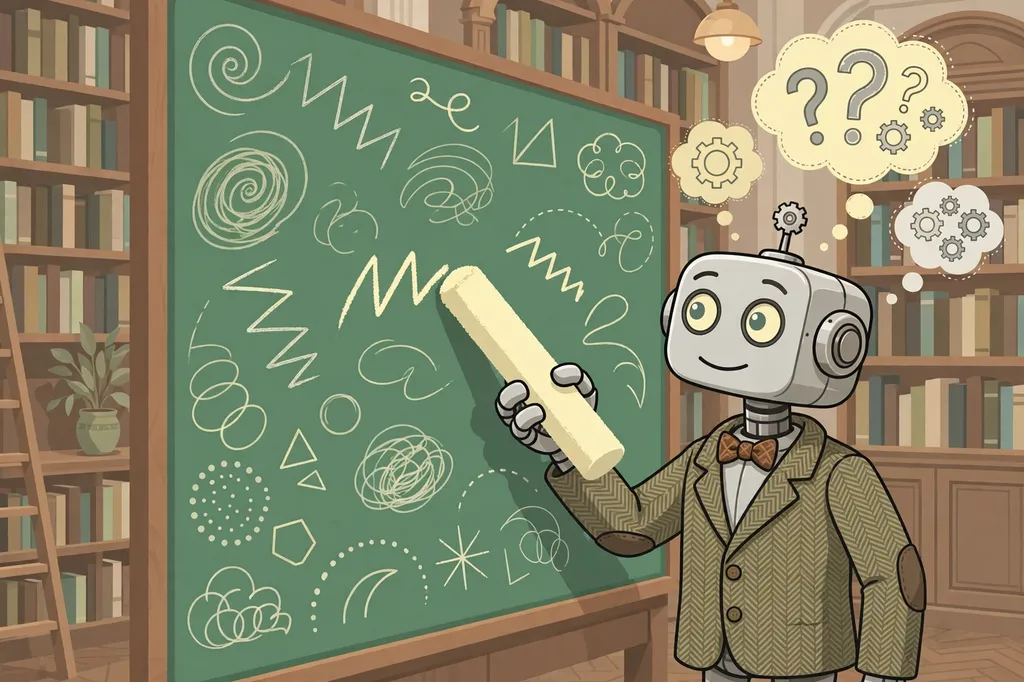
A cartoon robot mathematician writing abstract shapes on a giant chalkboard in an academic library.

OpenAI has thrown the mathematics world into turmoil. On October 6 and 7, the company published 722 manuscripts on GitHub claiming progress on 372 families of long-standing open problems, spanning theoretical computer science, physics, and mathematics, produced by an unreleased internal AI model whose full capabilities have not been disclosed.

The claimed highlights are extraordinary. OpenAI's post points to a proof of the Unique Games Conjecture, a load-bearing assumption in complexity theory, alongside Barnette's Conjecture and claimed progress on four of the seven Millennium Prize Problems. Just weeks earlier, the company had announced that the same internal system produced a proposed solution to the Navier-Stokes existence and smoothness problem, one of the Millennium Prize Problems carrying a one million dollar bounty, using roughly 10,000 autonomous AI agents over an 88-hour run that generated 130 billion tokens and 2.7 million inter-agent messages. OpenAI said it has no plans to claim the Clay Mathematics Institute prize.

The math community's reaction has been sharp. Fields Medalist Terence Tao of UCLA called the pace of AI-generated results "insane," and shared a statement from the Association for Human Mathematics urging mathematicians to stop collaborating with OpenAI and return to a vision of science that centers human understanding. NYU professor Tristan Buckmaster questioned whether 372 result families could plausibly be reviewed in the available time, and raised concerns about whether data from private Codex sessions had been used to train the model; OpenAI denied accessing private user data while conceding it could not rule out that de-identified usage data had helped.

There is also a genuine verification crisis. Only 10 of the manuscripts reportedly included the model's chain-of-thought reasoning, and just 42 percent underwent Lean code formalization for machine checking. That leaves the mathematical community with hundreds of dense papers to check, explain, and digest, work that moves at human speed no matter how fast the proofs were generated. Cambridge mathematics professor Timothy Gowers said he was "shocked" by how quickly the models improved this year, from mediocre graduate student to top-mathematician level. But solving is only the first of five hurdles: created, checked, explained, accepted, and digested.

Twenty-seven Fields Medalists had already co-signed a critical open letter weeks earlier, and OpenAI responded by creating an independent Mathematics and AI Advisory Group with nine leading mathematicians and physicists. The group advises on publication standards, but it does not control the pace of the research.


AI Implementation
AI Product News
OpenAI
AI Reasoning
AI Benchmarks
Mathematics
AI Research

Ai Industry News

Simons, OpenAI and Anthropic Put 15 Million Dollars Behind Checking AI Math

Cartoon illustration of robot mathematicians in a mountain workshop checking glowing scrolls of abstract geometric shapes with magnifying glasses.

On October 15, the Simons Foundation announced a partnership with Anthropic and OpenAI committing 15 million dollars in combined funding and resources to help mathematicians navigate the rapid rise of AI in their field. The foundation will manage and award the money, including through an open call for proposals, supporting workshops and programs where researchers evaluate recent AI-assisted results, learn new tools, share perspectives, and shape collective standards for AI use.

  • Read more about Simons, OpenAI and Anthropic Put 15 Million Dollars Behind Checking AI Math

Meta's Muse Spark Open Puts an 816-Billion-Parameter Model on Two Macs

Cartoon robot engineer linking two desktop computers beneath a glowing puzzle-piece brain in a mountain workshop

Meta released Muse Spark Open on Thursday, October 15, calling it the most capable United States open-weight model to date. That is a vendor claim, and independent testing will settle it, but the release itself is the news: after focusing on its closed Muse Wonder models earlier this week, Meta has put a frontier-scale model into downloadable weights that developers can host, inspect, and adapt outside Meta's own service.

  • Read more about Meta's Muse Spark Open Puts an 816-Billion-Parameter Model on Two Macs

Eight States Sue OpenAI in Eight Courts: ChatGPT Safety Is Now a Consumer-Protection Case

Cartoon robot chatbot in a courtroom workshop facing eight small capitol domes with a gavel and an open evidence binder on a desk.

Eight state attorneys general sued OpenAI on Wednesday, October 14, each filing separately in their own state court. The states are Arizona, Arkansas, Idaho, Iowa, Kansas, Montana, Nebraska and West Virginia, according to Reuters and Bloomberg Law reporting. Announced together in Des Moines, the cases are described as the most significant coordinated state action yet against an AI company, following a first state suit by Florida in June. These are civil allegations, not court findings, and no judge has ruled.

  • Read more about Eight States Sue OpenAI in Eight Courts: ChatGPT Safety Is Now a Consumer-Protection Case

Pagination

  • Current page 1
  • Page 2
  • Page 3
  • Page 4
  • Page 5
  • Page 6
  • Page 7
  • Page 8
  • Page 9
  • …
  • Next page Next ›
  • Last page Last »

Copyright © 2026 Rocky Mountain Madman LLC - All rights reserved

Developed and Designed by Rocky Mountain Madman LLC